Empower – Speech App Case Study
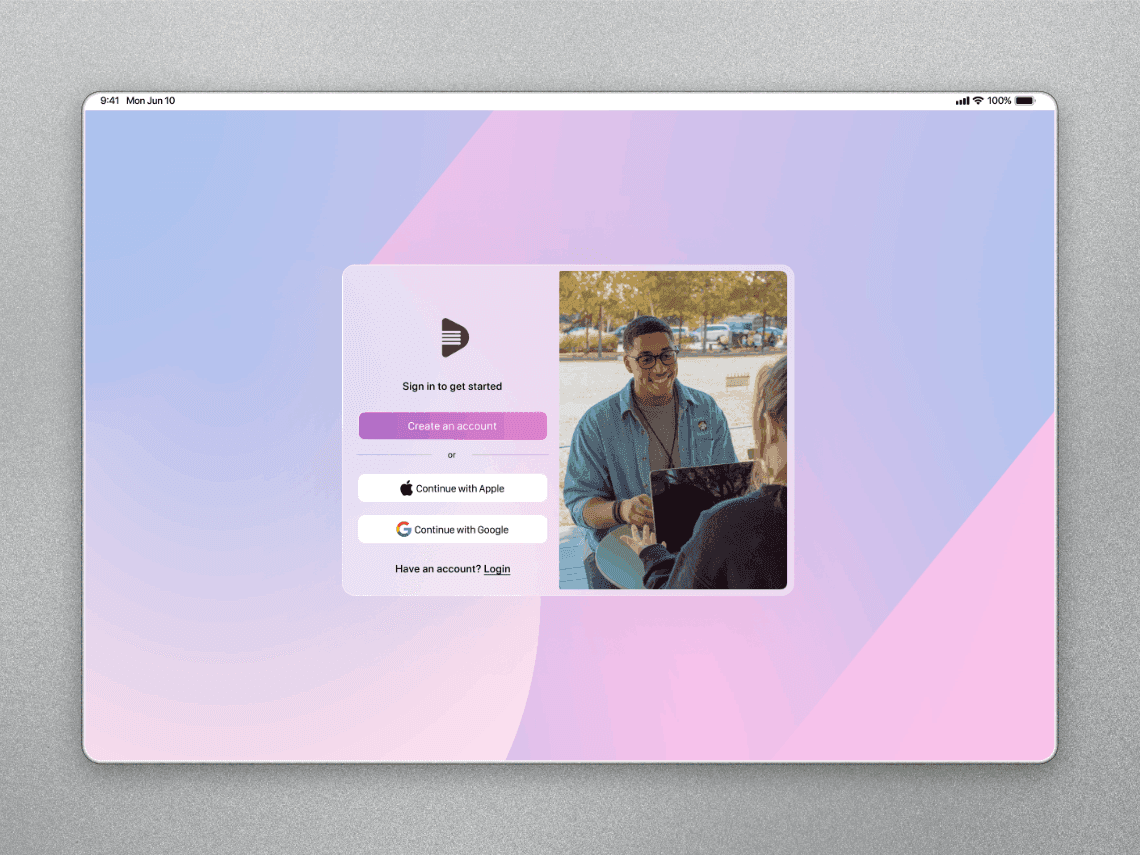
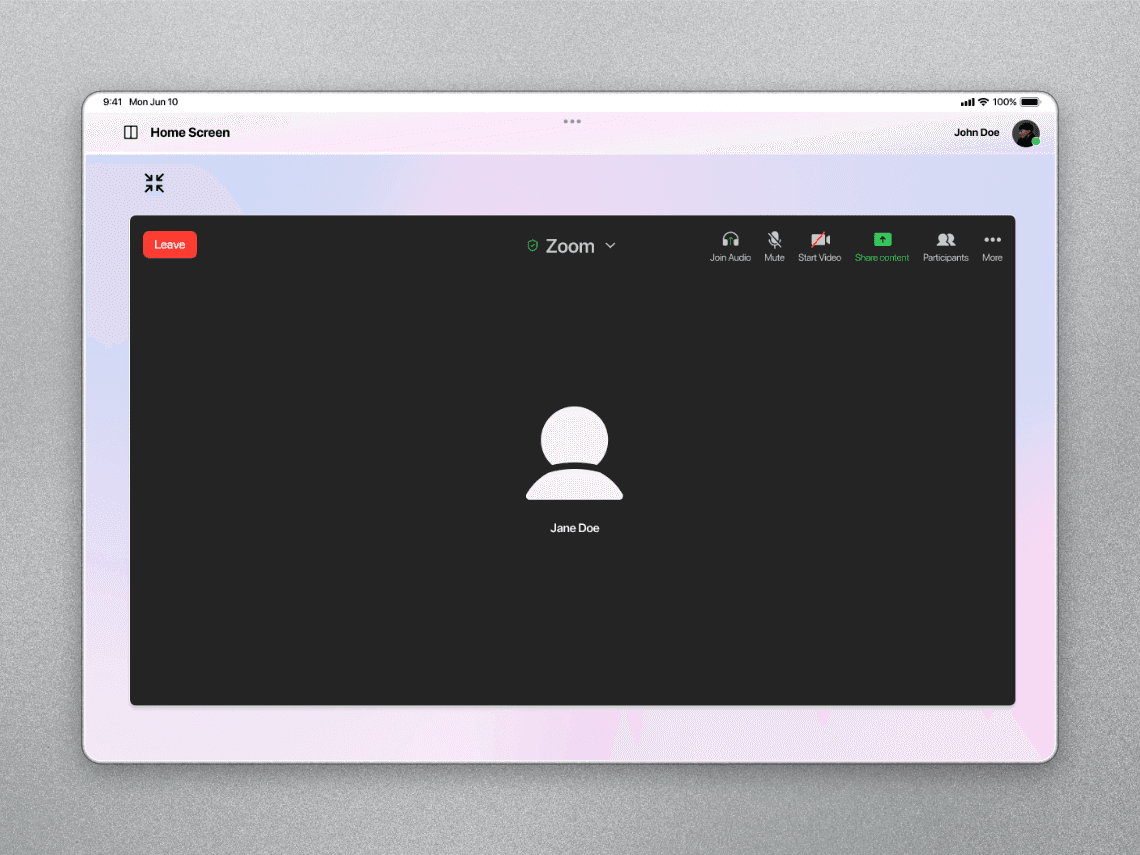
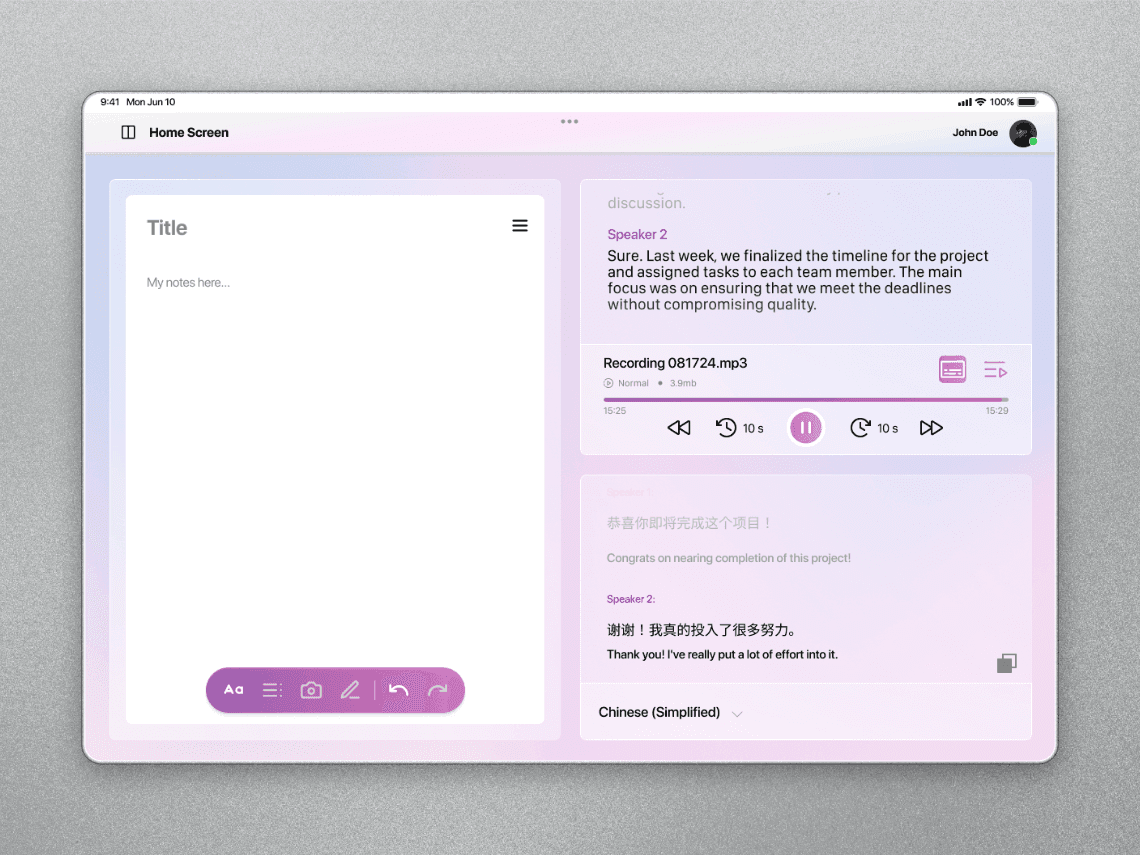
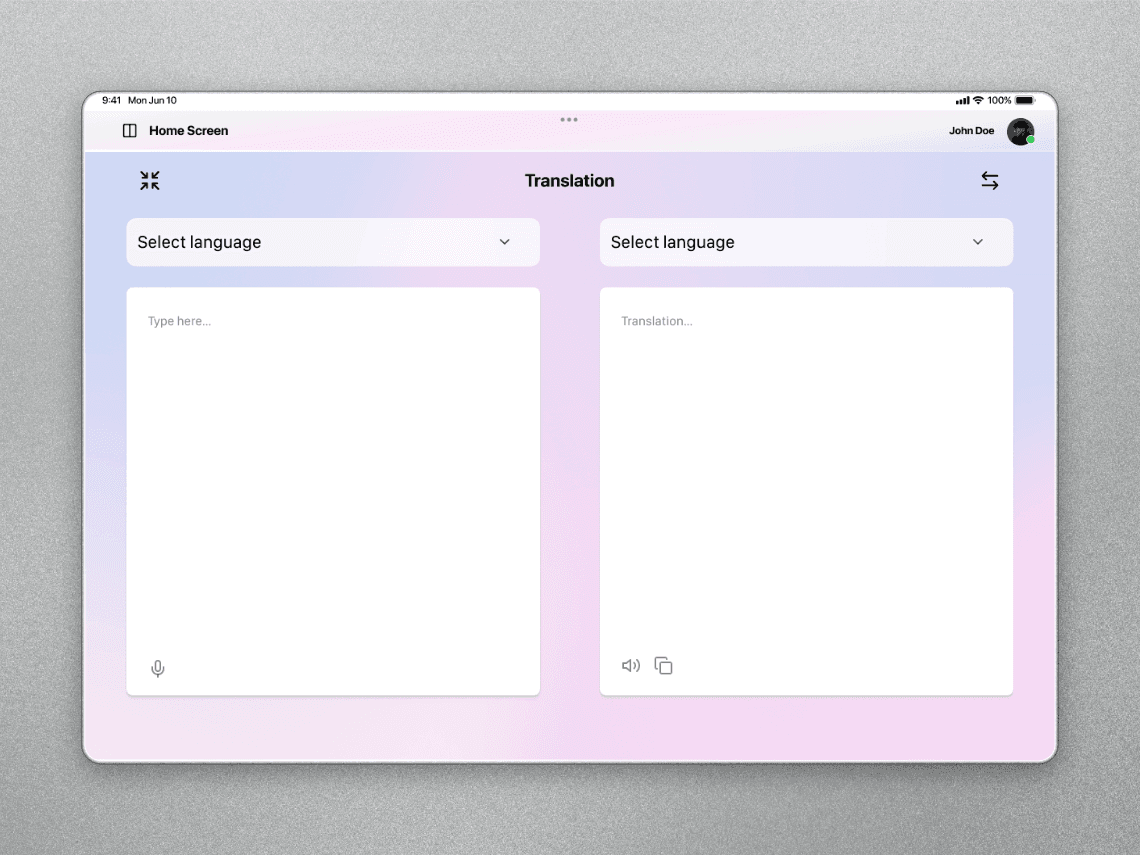
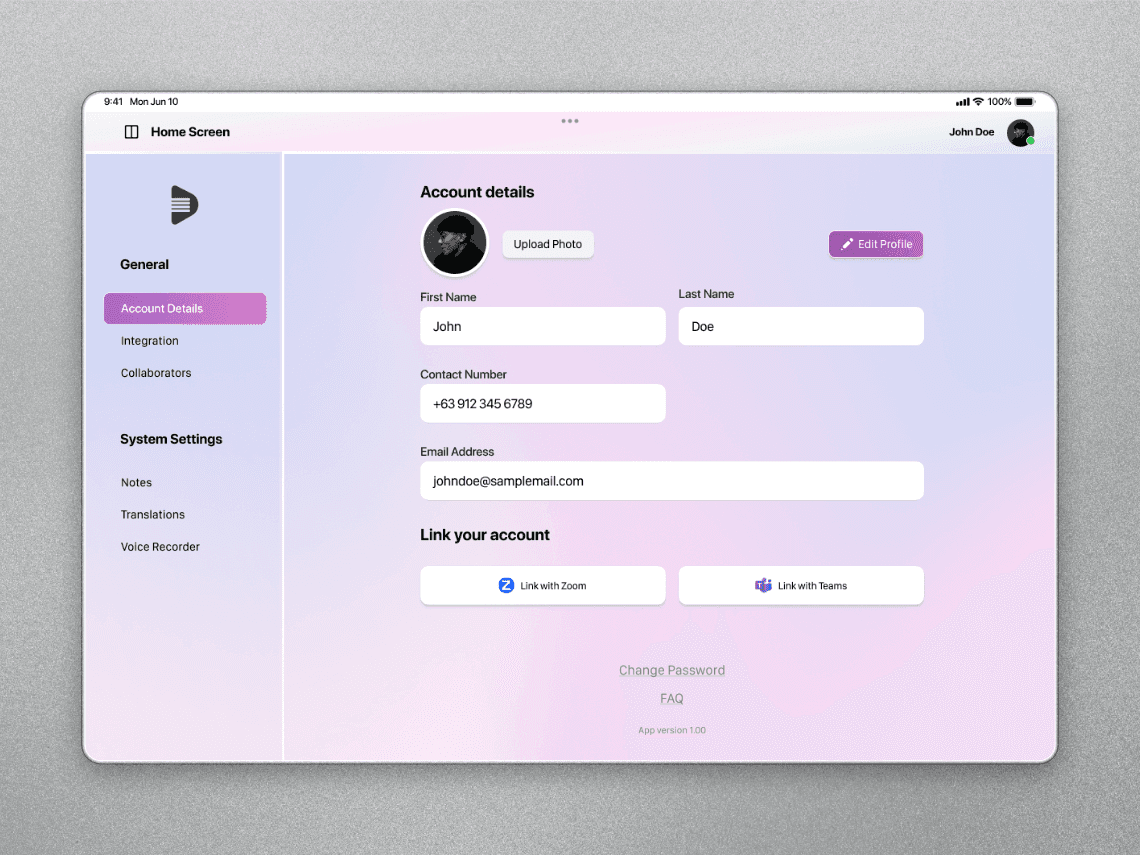
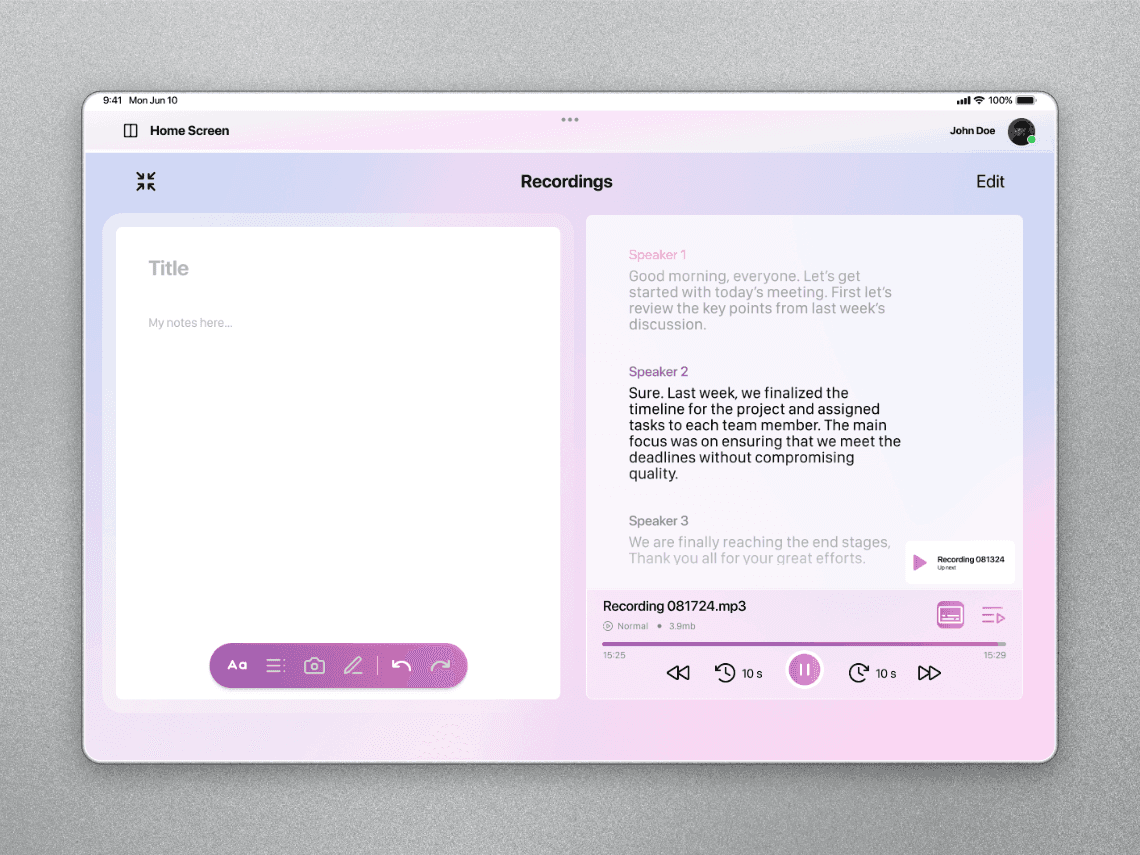
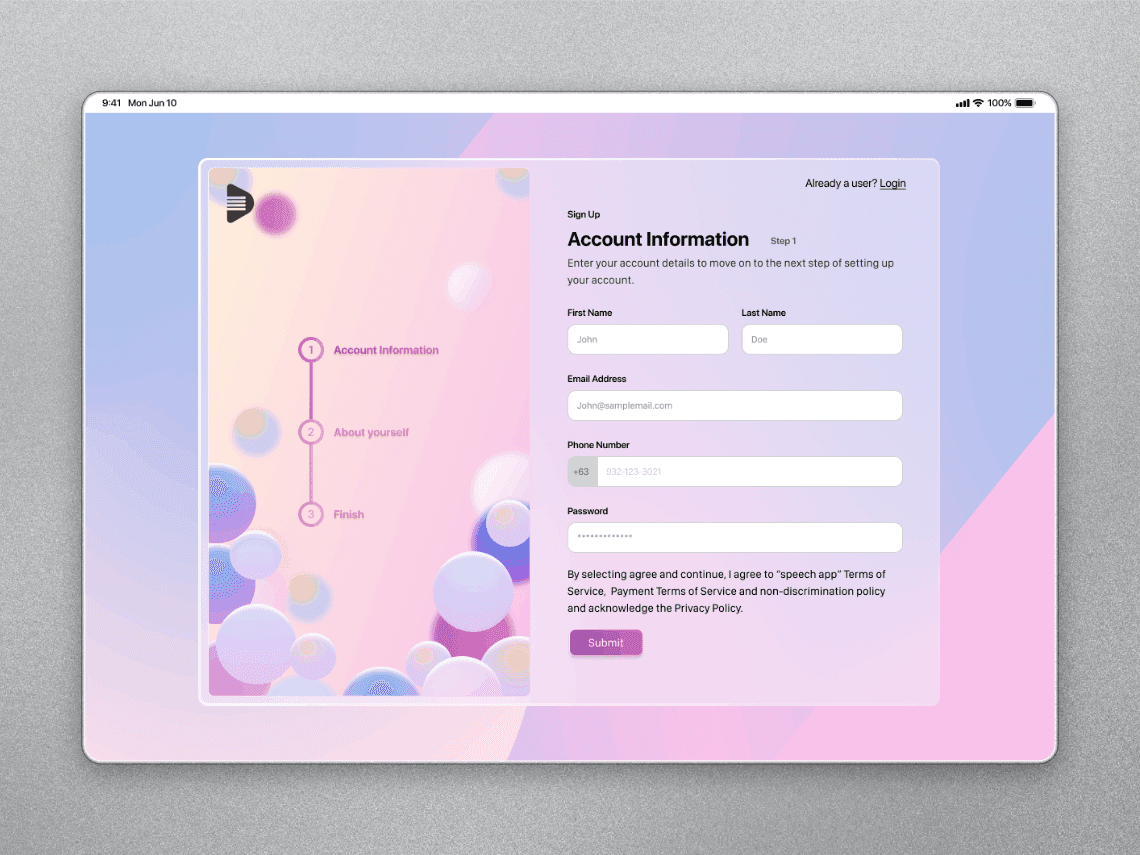
The Challenge: Users with hearing disabilities often struggle to participate in real-time collaboration tools like Zoom, which lack integrated accessibility features. Empower was designed to solve this by combining video calls, notes, audio recordings, and speech-to-text into one customizable workspace.
Year
2024
Services
UI/UX Design
Client
Go Virtual PH
/ Concept
My Approach: I started by mapping common collaboration workflows for users with hearing disabilities—noting where they had to switch between multiple apps (Zoom, notes, transcription tools).
The goal was to design a single, customizable dashboard where all critical tools are accessible without menu-diving, reducing cognitive load and task-switching friction.
/ Design
Challenge | Design Solution |
|---|---|
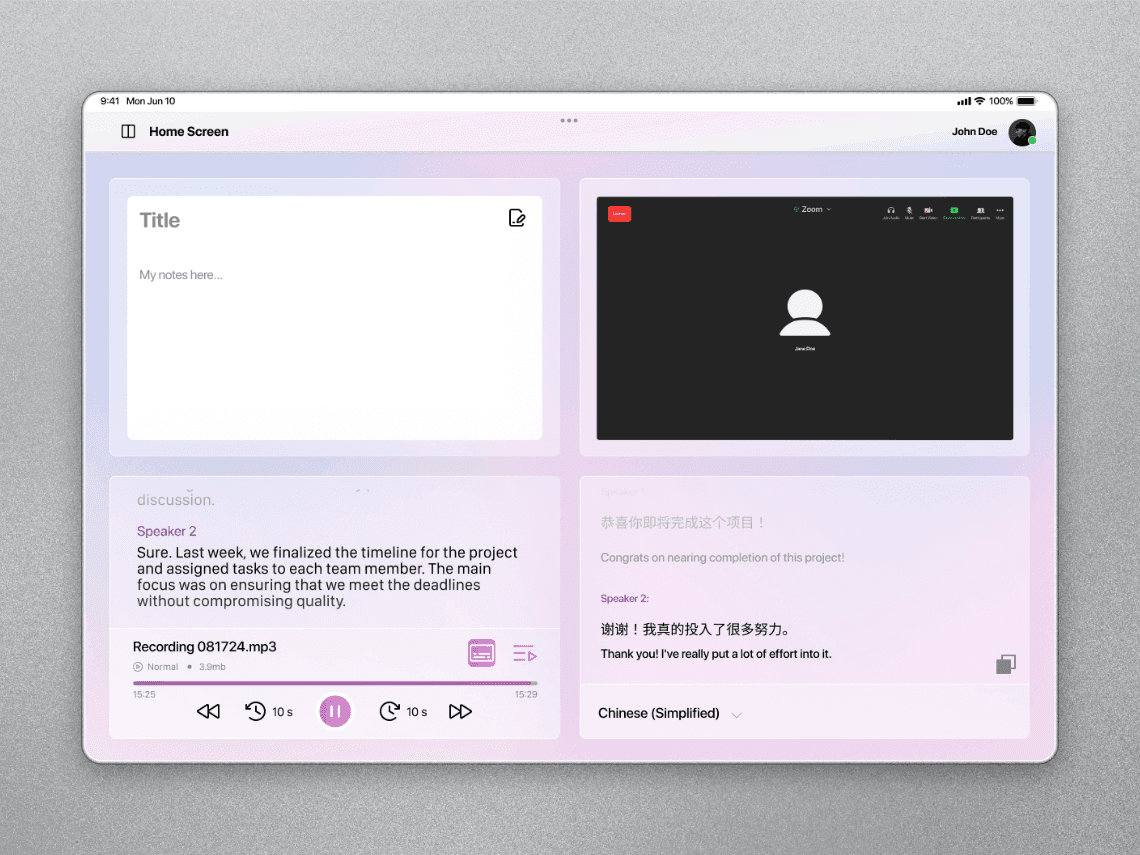
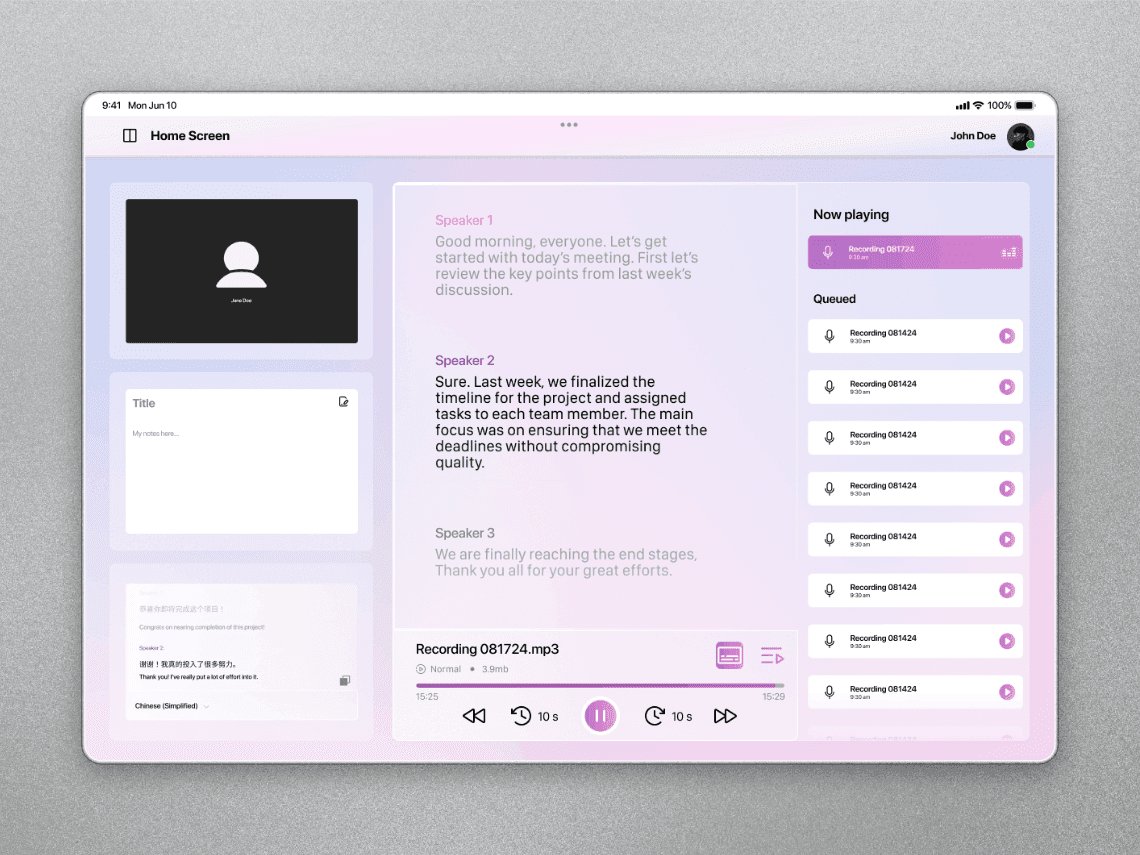
Fragmented Tools: Users had to juggle 3-4 separate apps (Zoom, Google Docs, Otter.ai) during meetings. | Designed an all-in-one interface with Zoom, Notes, Audio Recording, and Speech-to-Text in a single view. |
Inaccessible UI: Standard video tools don't prioritize visual clarity for users who rely on captions and visual cues. | Used high-contrast elements, large touch targets, and clear iconography to make every feature instantly recognizable. |
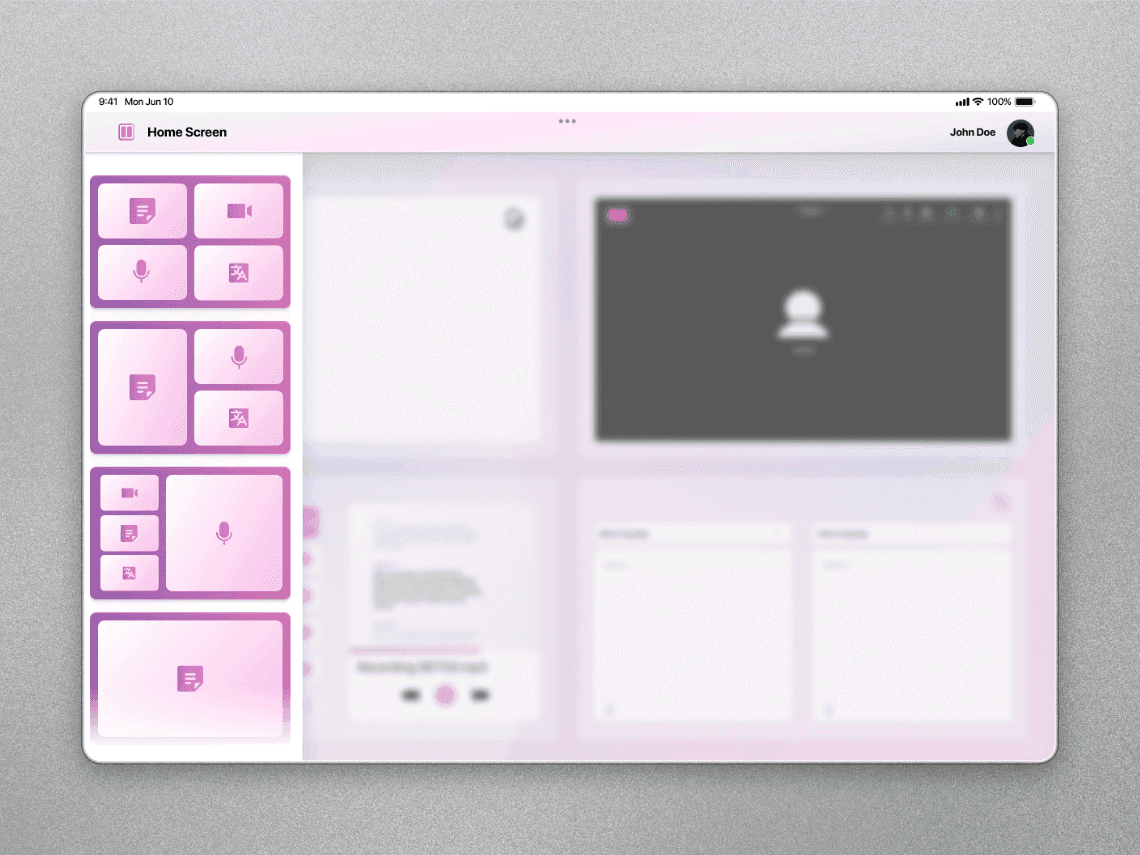
Rigid Layouts: Most apps force users into a fixed layout, even though workflows vary widely. | Created a customizable grid system where users can resize, reorder, and pin their most-used tools—reducing time spent navigating menus. |
/ Result
Outcome:
Reduced app-switching: Users can now access Zoom, Notes, Recordings, and Speech-to-Text from one screen instead of 3+ separate apps.
Faster task completion: Customizable grid layout lets users prioritize their most-used tools, cutting navigation time.
Improved accessibility: High-contrast UI and clear visual hierarchy made the app easier to use for users with hearing disabilities and other accessibility needs.
Positive client feedback: Go Virtual PH approved the design for development, citing the intuitive layout and accessibility-first approach.
Empower – Speech App Case Study
The Challenge: Users with hearing disabilities often struggle to participate in real-time collaboration tools like Zoom, which lack integrated accessibility features. Empower was designed to solve this by combining video calls, notes, audio recordings, and speech-to-text into one customizable workspace.
Year
2024
Services
UI/UX Design
Client
Go Virtual PH
/ Concept
My Approach: I started by mapping common collaboration workflows for users with hearing disabilities—noting where they had to switch between multiple apps (Zoom, notes, transcription tools).
The goal was to design a single, customizable dashboard where all critical tools are accessible without menu-diving, reducing cognitive load and task-switching friction.
/ Design
Challenge | Design Solution |
|---|---|
Fragmented Tools: Users had to juggle 3-4 separate apps (Zoom, Google Docs, Otter.ai) during meetings. | Designed an all-in-one interface with Zoom, Notes, Audio Recording, and Speech-to-Text in a single view. |
Inaccessible UI: Standard video tools don't prioritize visual clarity for users who rely on captions and visual cues. | Used high-contrast elements, large touch targets, and clear iconography to make every feature instantly recognizable. |
Rigid Layouts: Most apps force users into a fixed layout, even though workflows vary widely. | Created a customizable grid system where users can resize, reorder, and pin their most-used tools—reducing time spent navigating menus. |
/ Result
Outcome:
Reduced app-switching: Users can now access Zoom, Notes, Recordings, and Speech-to-Text from one screen instead of 3+ separate apps.
Faster task completion: Customizable grid layout lets users prioritize their most-used tools, cutting navigation time.
Improved accessibility: High-contrast UI and clear visual hierarchy made the app easier to use for users with hearing disabilities and other accessibility needs.
Positive client feedback: Go Virtual PH approved the design for development, citing the intuitive layout and accessibility-first approach.
Empower – Speech App Case Study
The Challenge: Users with hearing disabilities often struggle to participate in real-time collaboration tools like Zoom, which lack integrated accessibility features. Empower was designed to solve this by combining video calls, notes, audio recordings, and speech-to-text into one customizable workspace.
Year
2024
Services
UI/UX Design
Client
Go Virtual PH
/ Concept
My Approach: I started by mapping common collaboration workflows for users with hearing disabilities—noting where they had to switch between multiple apps (Zoom, notes, transcription tools).
The goal was to design a single, customizable dashboard where all critical tools are accessible without menu-diving, reducing cognitive load and task-switching friction.
/ Design
Challenge | Design Solution |
|---|---|
Fragmented Tools: Users had to juggle 3-4 separate apps (Zoom, Google Docs, Otter.ai) during meetings. | Designed an all-in-one interface with Zoom, Notes, Audio Recording, and Speech-to-Text in a single view. |
Inaccessible UI: Standard video tools don't prioritize visual clarity for users who rely on captions and visual cues. | Used high-contrast elements, large touch targets, and clear iconography to make every feature instantly recognizable. |
Rigid Layouts: Most apps force users into a fixed layout, even though workflows vary widely. | Created a customizable grid system where users can resize, reorder, and pin their most-used tools—reducing time spent navigating menus. |
/ Result
Outcome:
Reduced app-switching: Users can now access Zoom, Notes, Recordings, and Speech-to-Text from one screen instead of 3+ separate apps.
Faster task completion: Customizable grid layout lets users prioritize their most-used tools, cutting navigation time.
Improved accessibility: High-contrast UI and clear visual hierarchy made the app easier to use for users with hearing disabilities and other accessibility needs.
Positive client feedback: Go Virtual PH approved the design for development, citing the intuitive layout and accessibility-first approach.